

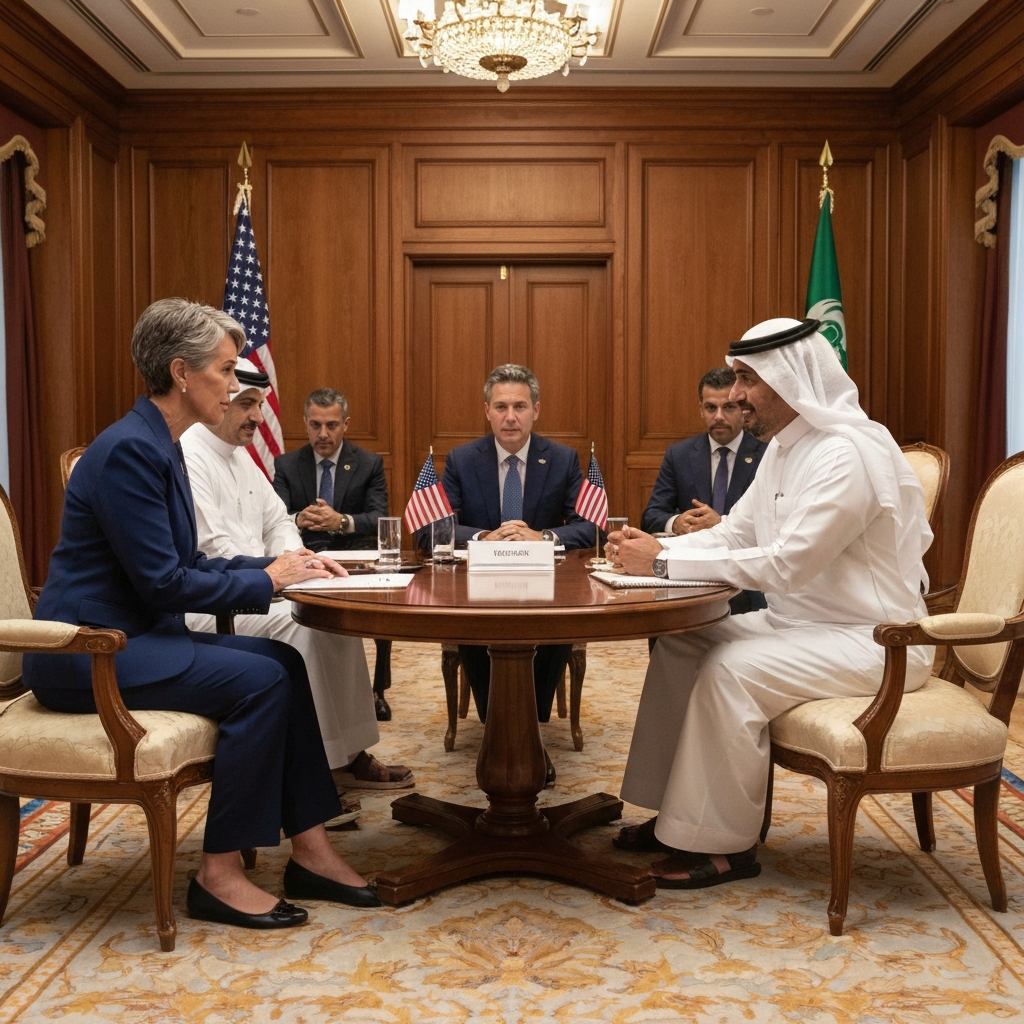
The longstanding alliance between the United States and Saudi Arabia has been a cornerstone of Middle Eastern geopolitics for decades. Rooted in mutual interests—primarily energy security and regional stability—this relationship has weathered numerous challenges. However, recent global economic shifts and policy decisions have introduced new dynamics that warrant a closer examination.
Historical Context
Established in 1933, formal diplomatic relations between the U.S. and Saudi Arabia have been characterized by strategic cooperation. The U.S. has historically provided military support to the Kingdom in exchange for a stable oil supply and alignment on key foreign policy issues. This partnership has been instrumental in shaping the political landscape of the Middle East. [Source: Wikipedia]
Recent Economic Developments
The global economy has been significantly impacted by the ongoing conflict in the Middle East. The war has disrupted energy markets, leading to increased oil prices and inflationary pressures worldwide. For the U.S., this has translated into higher gasoline prices and a potential rise in headline inflation to 4% or more by year’s end. [Source: Kiplinger]
These economic challenges have prompted the U.S. to reassess its foreign policy strategies, including its relationship with Saudi Arabia. The Kingdom’s role as a leading oil producer positions it as a key player in mitigating global energy crises. However, the evolving geopolitical landscape necessitates a reevaluation of bilateral ties to ensure mutual benefits and regional stability.
Implications for the Middle East
The Middle East, including Saudi Arabia, faces multifaceted challenges due to the current economic climate. The disruption of the Strait of Hormuz has affected oil exports, a critical revenue source for Gulf countries. Additionally, the region’s reliance on food imports through key ports has raised concerns about food security. [Source: Le Monde]
In this context, the U.S.-Saudi relationship becomes even more pivotal. Collaborative efforts to stabilize energy markets and address economic challenges can foster regional resilience. Moreover, diplomatic engagement can pave the way for addressing broader issues, including security concerns and economic diversification.
Conclusion
As global economic shifts continue to unfold, the U.S.-Saudi relationship stands at a crossroads. Both nations have the opportunity to redefine their partnership to address contemporary challenges and seize emerging opportunities. By fostering open dialogue and strategic cooperation, they can contribute to regional stability and economic prosperity.