

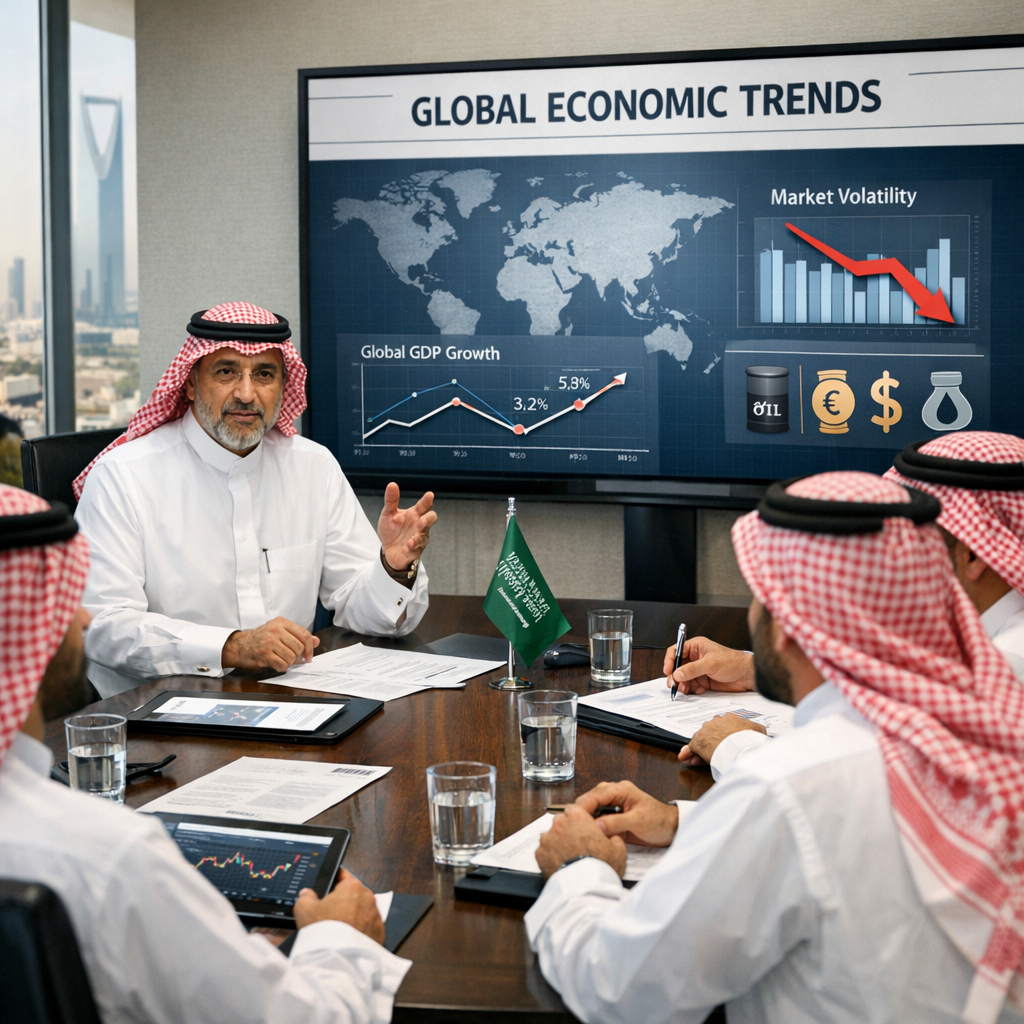
The global economic landscape is undergoing significant transformations, influenced by geopolitical tensions, technological advancements, and evolving trade dynamics. These changes have profound implications for economies worldwide, including Saudi Arabia.
Global Economic Outlook
Recent reports indicate a moderation in global growth. The International Monetary Fund (IMF) projects global growth to slow to 3.1% in 2026, down from 3.4% in 2025, largely due to geopolitical conflicts and their economic repercussions. This slowdown is accompanied by a modest rise in global inflation, reflecting disruptions in energy markets and supply chains.
Impact on Saudi Arabia
As a leading oil exporter, Saudi Arabia’s economy is closely tied to global energy markets. The ongoing conflict in the Middle East has led to volatility in oil prices, affecting national revenues and economic planning. Additionally, the global shift towards artificial intelligence (AI) and technological innovation presents both challenges and opportunities. While AI adoption can enhance productivity, it also necessitates workforce adaptation and investment in new skills.
Strategic Responses
In response to these global shifts, Saudi Arabia continues to advance its Vision 2030 initiative, aiming to diversify the economy beyond oil dependency. Investments in sectors such as technology, tourism, and renewable energy are being prioritized to build a more resilient and diversified economic base. Moreover, fostering international partnerships and enhancing trade relations are crucial to navigating the complexities of the current global economic environment.
Conclusion
Understanding and adapting to global economic trends is essential for Saudi Arabia’s sustained growth and development. By proactively addressing these challenges and leveraging emerging opportunities, the Kingdom can strengthen its position in the global economy and achieve its long-term strategic objectives.