

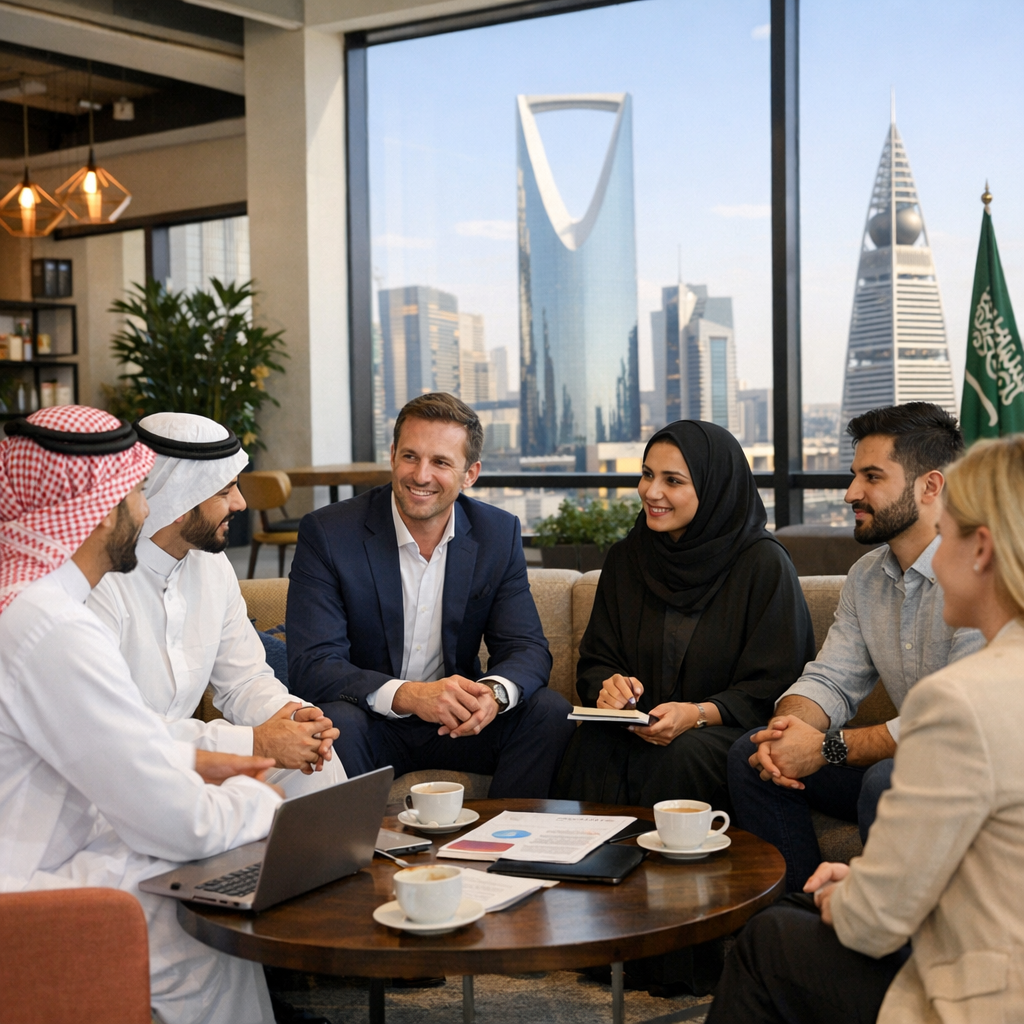
Riyadh is in the midst of a quiet economic revolution. Fueled by Vision 2030 policies, rising investment, and supportive government programs, the city has become one of the fastest-growing hubs for entrepreneurship and job creation in the region. For local business owners and jobseekers alike, staying aware of these trends isn’t just helpful—it may be essential.
SME Growth: A New Backbone of Riyadh’s Economy
Micro, small, and medium enterprises (MSMEs) have exploded in recent years. Saudi Arabia now hosts about 1.76 million active MSMEs—more than four times the number in 2016. Nearly half of those are in Riyadh, which accounts for almost two-thirds of all new MSME registrations nationwide. Micro businesses alone now make up nearly 90% of the total MSME base, signaling an economy increasingly powered by nimble, often locally rooted enterprises.
Job Market: Where the Demand Is Strong
The fastest-growing employment sectors in Riyadh reflect the national strategy to diversify beyond oil. Key growth areas include professional & technical services, accommodation & food services, information & communication, and entertainment & recreation—each seeing double-digit hiring increases.
Unemployment among Saudis continues to fall, thanks to labour reforms, stronger alignment between training and market needs, and increasing female participation in the workforce. In 2025, Saudi unemployment dropped significantly compared to earlier years.
Supportive Policies and Ecosystem Changes
Government initiatives are making it easier for entrepreneurs to launch and grow. Monsha’at runs programs to refund registration and licensing fees for new startups, reducing early cost burdens. The “Tamkeen” program offers incentives to tech-driven SMEs to retain Saudi talent. Regulatory reforms have ushered in simplified licensing, startup visas, and regulatory sandboxes, especially in fintech and AI.
Pop-ups (short-term retail spaces), specialty food & beverage concepts, and experiential brands are also riding the wave. These allow entrepreneurs to test ideas with lower risk, build brands in new ways, and reach consumers craving modern experiences.
Challenges Ahead: Scale, Skills, and Sustainability
Despite the momentum, scaling up from micro to small and medium levels remains difficult. Many firms stay small due to access to capital, gaps in managerial skills, or supply chain constraints. Additionally, there is a growing mismatch between what businesses are demanding and what many jobseekers are trained to do—in fields like professional & scientific technical services or information technologies, demand outpaces supply.
Sustainability is also gaining importance across sectors—not just environmental, but financial and operational. Concepts that integrate quality, local identity, modern customer expectations, and responsible practices tend to perform better in the evolving Riyadh market.
What Entrepreneurs and Jobseekers Should Do
- Focus on sectors aligned with Riyadh’s strategic goals—tech, hospitality & F&B, entertainment, logistics, and communication.
- Tap into government programs: get familiar with Monsha’at’s offerings, Estrdad fee refunds, the Tamkeen incentives, and so forth.
- Invest in skills that match demand—digital, technical, customer experience, operations.
- Use pop-ups or flexible retail/testing formats to validate ideas cheaply and learn fast.
- Form networks—join startup communities, mentorship programs, curated networking platforms. Relationships matter greatly.
Riyadh’s economic future looks less like one defined by oil, and more like one built by entrepreneurs, jobmakers, and creative problem-solvers. For locals just starting out, or businesses looking to expand, the time to understand what’s shifting—and to position for what comes next—is now.